Robot Learning Lab University of Calgary
Mechanical & Manufacturing Engineering

Robots that learn from human experts, and recover when it goes wrong

Learning from demonstration for manufacturing, welding and neurosurgery, tested on physical robots and released as open data.

Our research Join the lab
2,160
demonstrations
18
assembly tasks
50%
recovery episodes
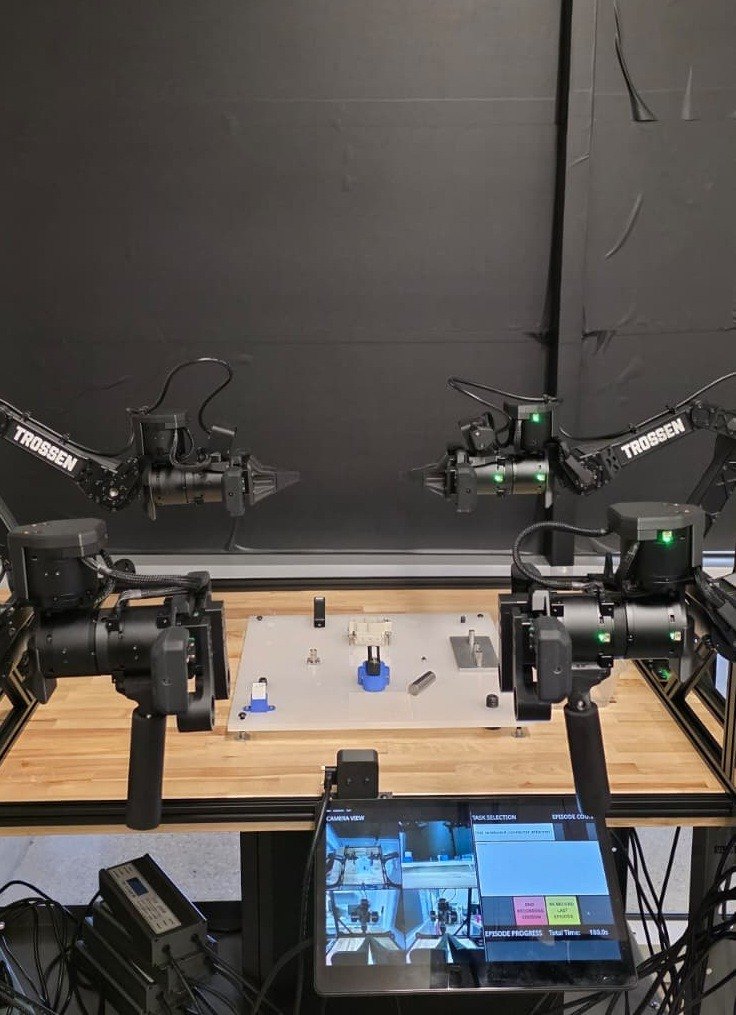
ALOHA bimanual teleoperation platform with two follower arms over a precision-assembly task board
Bimanual teleoperation platform used to collect the REBOOT benchmark

Vision

Robots that learn skilled work from human experts, including how experts recover when things go wrong, and carry that skill wherever tasks vary, errors are costly and expertise is scarce: the factory floor, the welding bay and the operating room.

Overview

The Robot Learning Lab transfers human expertise to robots through learning from demonstration. Robot learning has largely advanced by training on curated successes; we start from a different premise, that expertise is most visible in how experts detect deviations and recover from them. We build datasets, benchmarks and policies that learn from near-failures and corrections, and test them on physical hardware in three domains.

Our research

Three domains, one premise

01 · Low-volume, high-mix manufacturing

New tasks from a few demonstrations

When no two jobs are alike, pre-programming a robot for each one does not pay off. We combine imitation learning and meta-learning so robots acquire new assembly and tool-use tasks from a few demonstrations, and recover when tight tolerances turn small errors into jams. Our open REBOOT benchmark pairs 1,080 expert demonstrations with 1,080 recovery episodes across 18 precision-assembly tasks.

Read more →
(a) Where learned skills pay off
Product mix →
High mix · low volumeOur focusMostly manual today; learned skills with recovery
High mix · high volumeFlexible automationReconfigurable cells
Low mix · low volumeManual workSmall runs of repeated parts
Low mix · high volumePre-programmedFixed paths, long runs
Production volume →
(b) Successful trajectories and recovery from failure, by phase REBOOT overview: five phases with successful frames on the left and induced failures paired with expert recoveries on the right
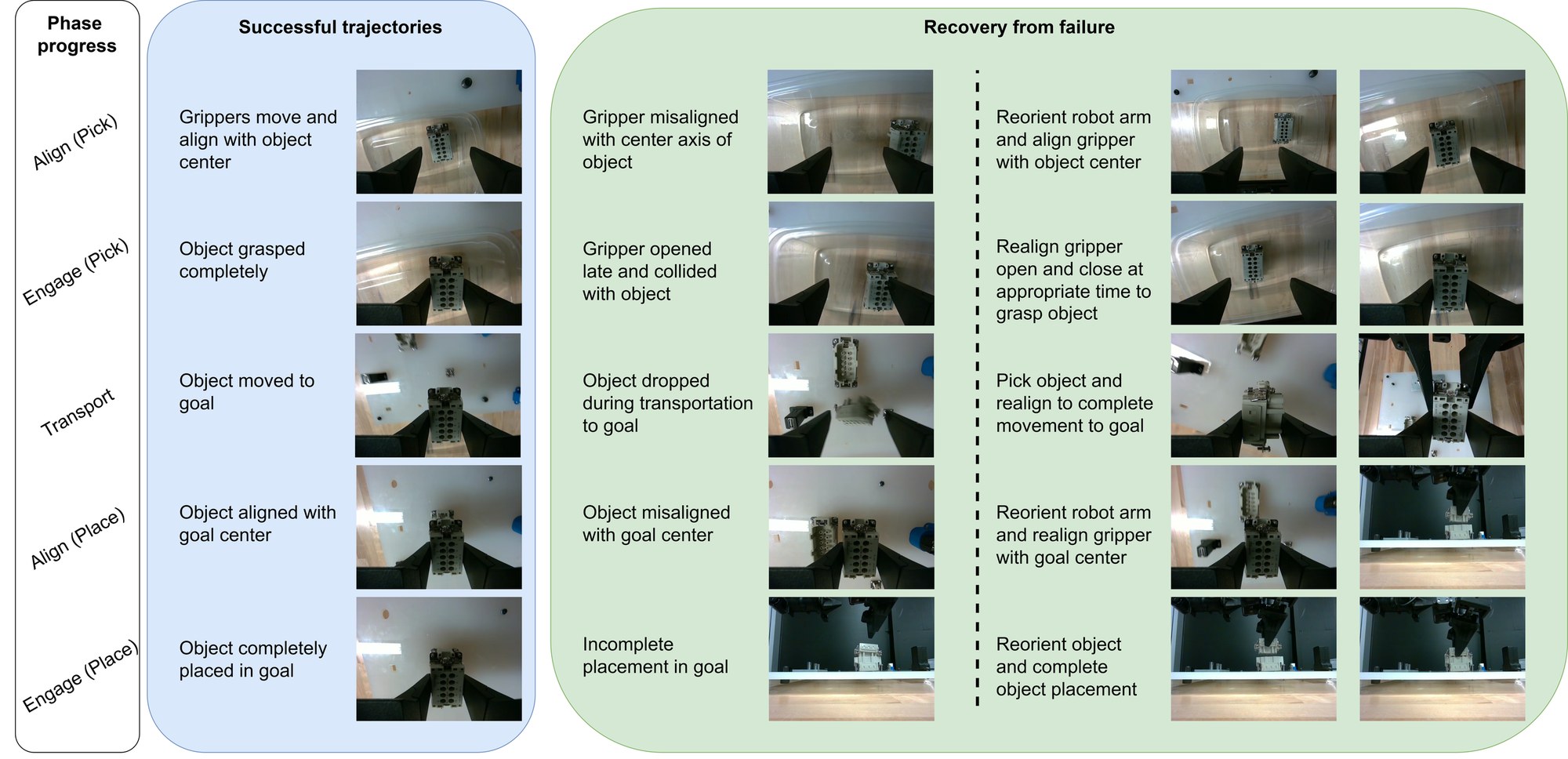
Fig. 1 — Learned skills target high-mix, low-volume work, where pre-programming each task is uneconomic.

02 · Welding & 3D printing

Process control grounded in metallurgy

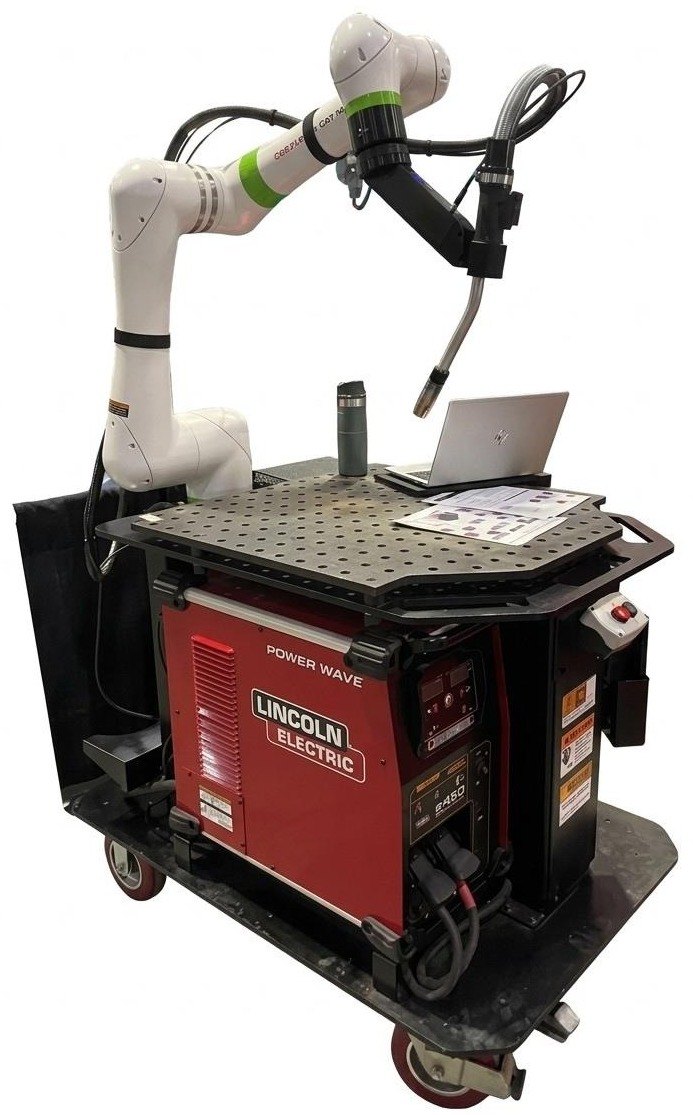
Repair welding and cladding remain largely manual because every part differs and quality is decided by metallurgy, not trajectory accuracy. We learn from expert welders' corrections to process deviations, infer the deposit's state from weld-pool imaging, acoustics and arc signals, and adjust the torch while the pool is still molten, with success confirmed by sectioning. The same principle extends to metal and concrete 3D printing.

Read more →
(a) Welding cobot cell
Lincoln Electric COOPER welding cobot cell with a FANUC CRX collaborative arm and torch
(b) Closed-loop correction during deposition
1 · SenseHDR weld-pool imaging, acoustic emission, arc current and voltage
2 · InferPool geometry, thermal state and penetration, mapped to deviations expert welders name
3 · CorrectTorch angle, contact-tip-to-work distance, travel speed, wire feed
↺ Repeat while the pool is still molten
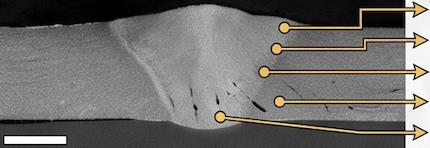
(c) Metallurgical ground truth from sectioning
Etched weld cross-section with callouts to measured quality features
Dilution (%) Penetration depth HAZ hardness profile Porosity count Cracking length
(d) Extends toMetal additive manufacturingConcrete 3D printing
Fig. 2 — Correction during deposition, trained against metallurgical outcomes rather than path accuracy.

03 · Neurosurgery

From teleoperated to semi-autonomous surgery

With Project neuroArm, developers of the first image-guided, MR-compatible robot for brain surgery, we aim to let robots learn repeatable surgical sub-skills (retraction, suction, dissection) from expert demonstration and perform them under surgeon supervision. The first step converts long-stream operating-room recordings into a robot-learning dataset, benchmarked on neuroArm with a surgical phantom.

Read more →
(a) Progression of surgical autonomy
Teleoperated Learned sub-skills, surgeon-supervised Semi-autonomous
(b) From operating-room recordings to a policy on neuroArm
1 · RecordRobot kinematics, video, audio and tool–tissue force from the operating room
2 · SegmentSub-task episodes with surgeon-defined boundaries and success and failure labels
3 · LearnImitation-learned policies for retraction, suction and dissection
4 · EvaluateneuroArm on a surgical phantom: task success, force-safety bounds, surgeon ratings
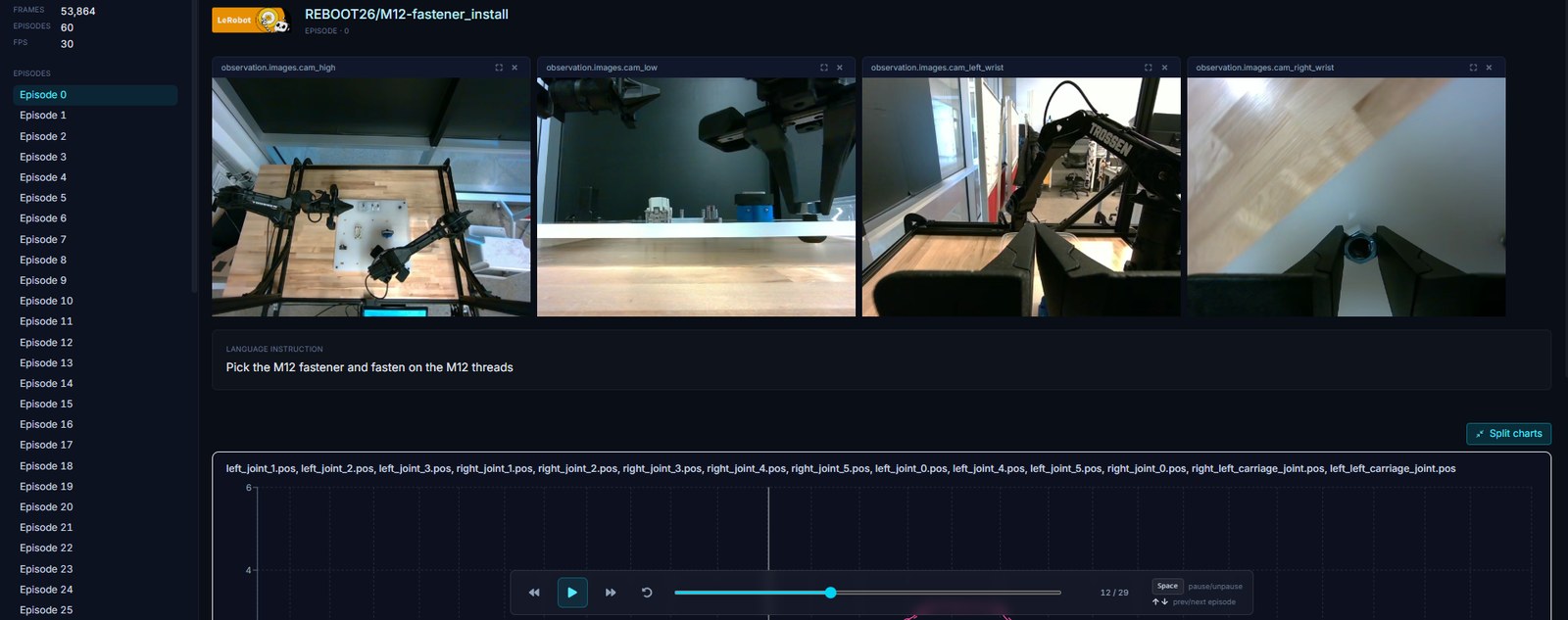
(c) Recording and annotation pipeline carried over from REBOOT REBOOT episode viewer with four synchronized camera views, a language instruction and joint-state plots
Fig. 3 — From operating-room recordings to supervised sub-task autonomy on neuroArm.
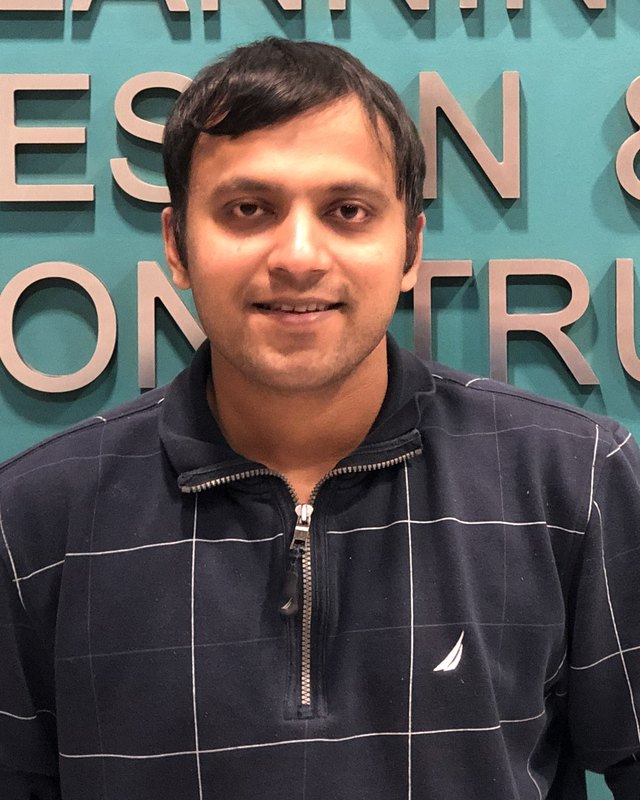
Portrait of Dr. Joseph Thekinen

Lab director

Dr. Joseph Thekinen

Associate Professor · Graduate Program Director (M.Eng.)
Mechanical and Manufacturing Engineering, Schulich School of Engineering

His group develops imitation-learning and meta-learning methods that let robots acquire skills from expert human demonstration and recover from failure, with applications in manufacturing, welding and surgery. He holds an NSERC Discovery Grant and a Ph.D. from Purdue University.

Office[Building, room] · 2500 University Drive NW, Calgary
Full profile →

News

  • Sep 2026REBOOT preprint posted to arXiv, with datasets for six connector families released on Hugging Face.
  • Jul 2026Joseph Thekinen promoted to Associate Professor.
  • 2026Lincoln Electric COOPER welding cobot cell with in-situ sensing added to the shared lab with Dr. Muhammad Shehryar Khan's group.
  • 2025Schulich Momentum Grant for a meta-learning video dataset benchmark for adaptive manufacturing, with Dr. Samira Ebrahimi Kahou.

Open data

REBOOT datasetshuggingface.co/REBOOT26 REBOOT paperarXiv:2609.22591 Project page and codenanayawoa.github.io/REBOOT

Join the lab

We recruit MSc and PhD students from mechanical, mechatronics, electrical and software engineering, and computer science, with co-supervision in materials science, AI and medicine. [Current openings and start terms.]

How to apply Email us